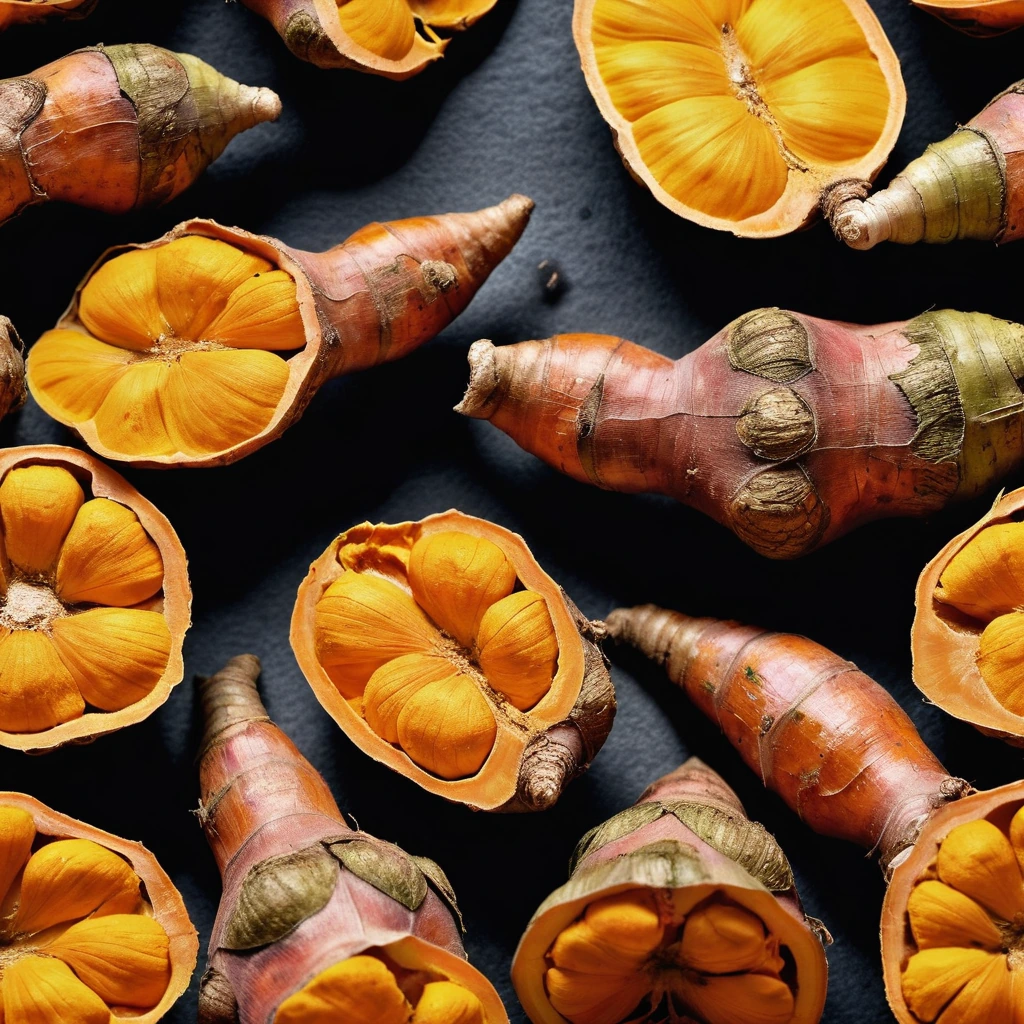
Fresh Turmeric Root
Fresh turmeric root is the unprocessed rhizome of the Curcuma longa plant, a member of the ginger family. Originating in Southeast Asia and South India, turmeric has been used for millennia in both culinary and medicinal traditions. Its flavor is earthy and slightly peppery with a subtle sweetness, reminiscent of mustard but milder. The aroma is warm and musky. When eaten raw, its texture is firm and waxy, but it softens considerably when cooked. Fresh turmeric behaves well in cooking, infusing dishes with its vibrant yellow color and distinctive taste. It is often grated or minced before use and is known to release its full flavor when gently simmered or roasted.
Notes
When selecting fresh turmeric, look for roots that are firm, smooth, and free of wrinkles or soft spots. Stored in the refrigerator, fresh turmeric can last up to three weeks. For longer storage, keep it in the freezer for up to six months. To prepare, simply scrub the root under running water and peel off the skin with a spoon or knife. Note that turmeric stains easily, so handle with care and use gloves if necessary. Those with gallbladder issues or allergies to ginger should consult a healthcare provider before consuming turmeric.
Uses
- Grate into smoothies
- Add to curry pastes
- Simmer in soups and stews
- Infuse into rice dishes
- Blend into salad dressings
- Steep in tea blends
- Roast with vegetables
Replacements
- Ground turmeric (less potent)
- Fresh ginger root (different flavor)
- Saffron threads (for color, not flavor)
- Annatto seeds (for color, not flavor)
- Mustard seeds (for a similar pungency)
You might also like
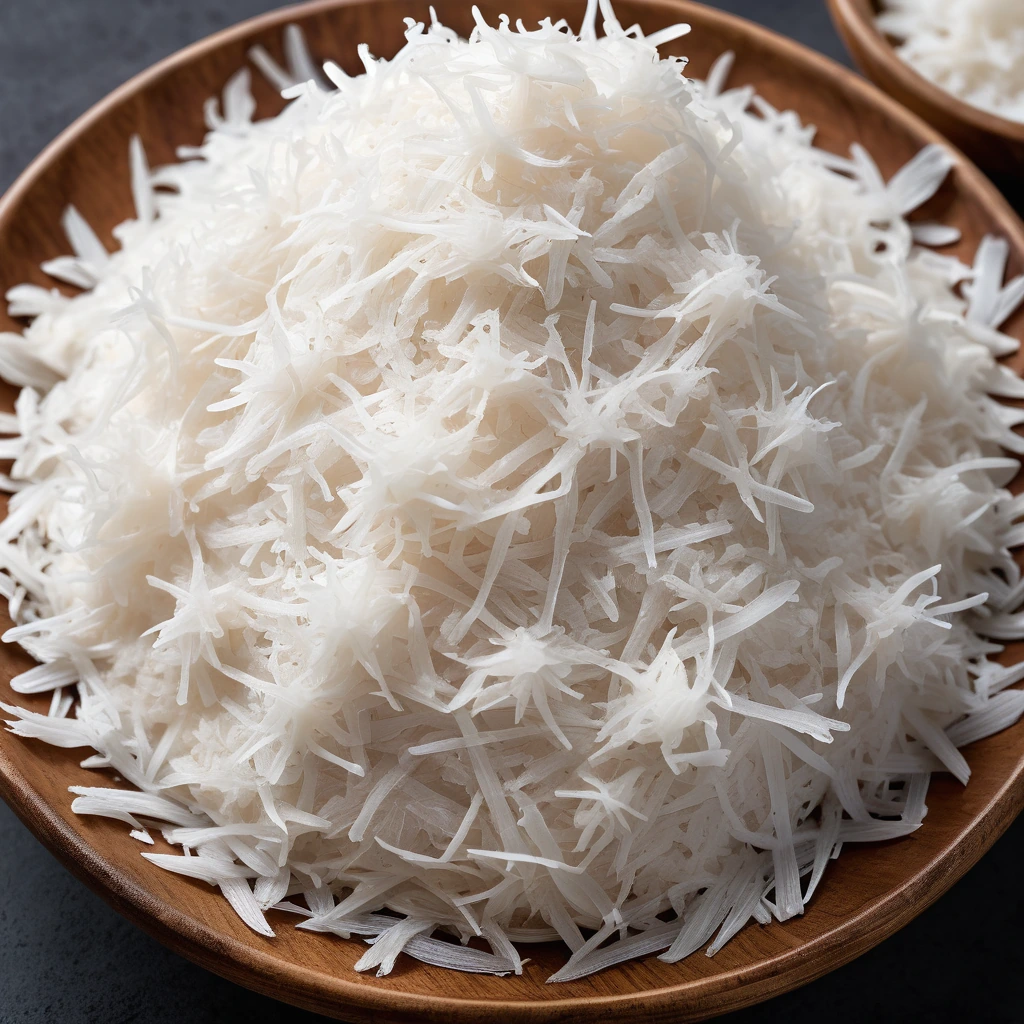
Sweetened Shredded Coconut
A tropical treasure, sweetened shredded coconut boasts tender, flaky strands kissed with a touch of sugar, offering a delightful balance of sweetness and nutty richness.
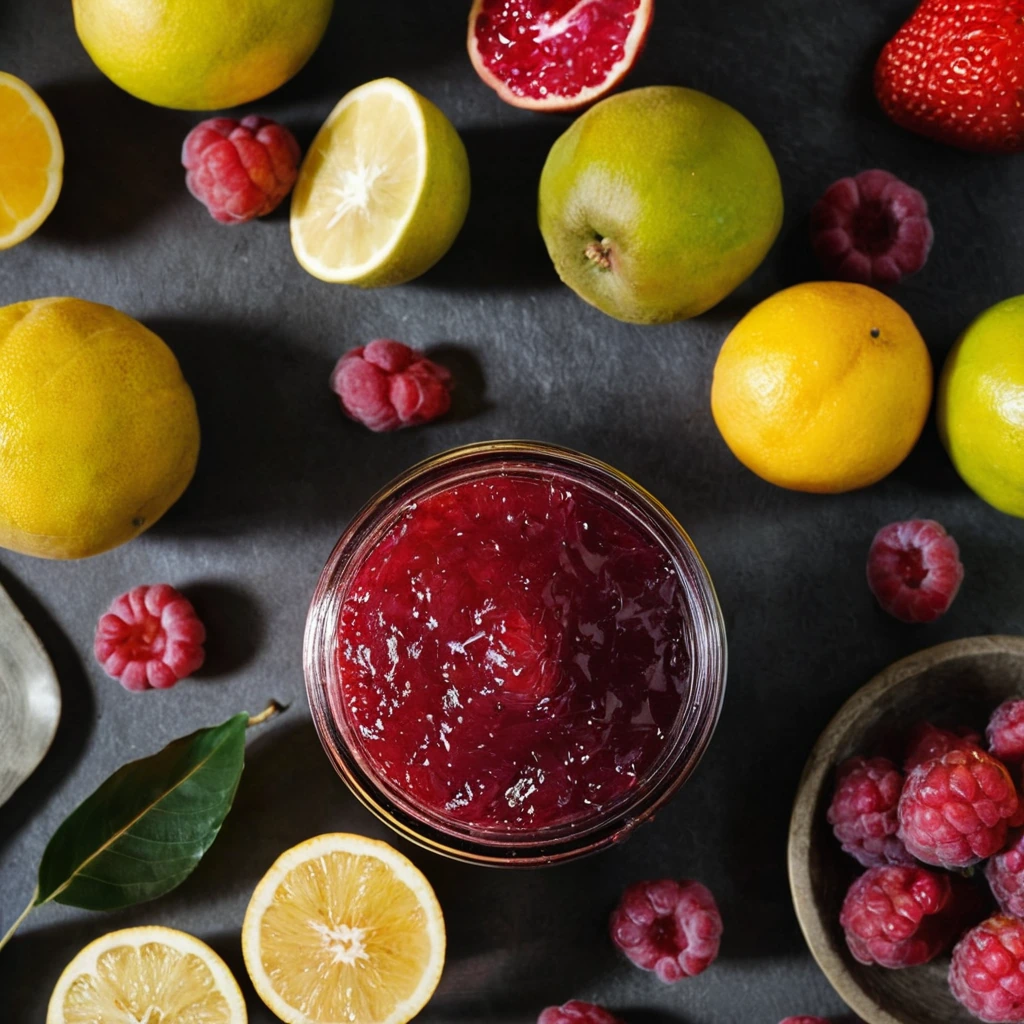
Fruit Jam
Fruit jam is a smooth, spreadable preserve made by cooking fruit with sugar until it reaches a gel-like consistency. Its origins trace back to ancient times, with evidence of fruit preservation found in Middle Eastern and European cultures. The flavor profile of jam varies widely depending on the fruit used, offering options from sweet and tangy strawberry to rich and complex blackberry. Its texture is typically thick and cohesive, providing a satisfying mouthfeel that is both firm and spreadable. In cooking, jam is valued for its ability to add sweetness and fruity flavor to dishes, as well as its capacity to act as a glaze or binder in both sweet and savory applications.